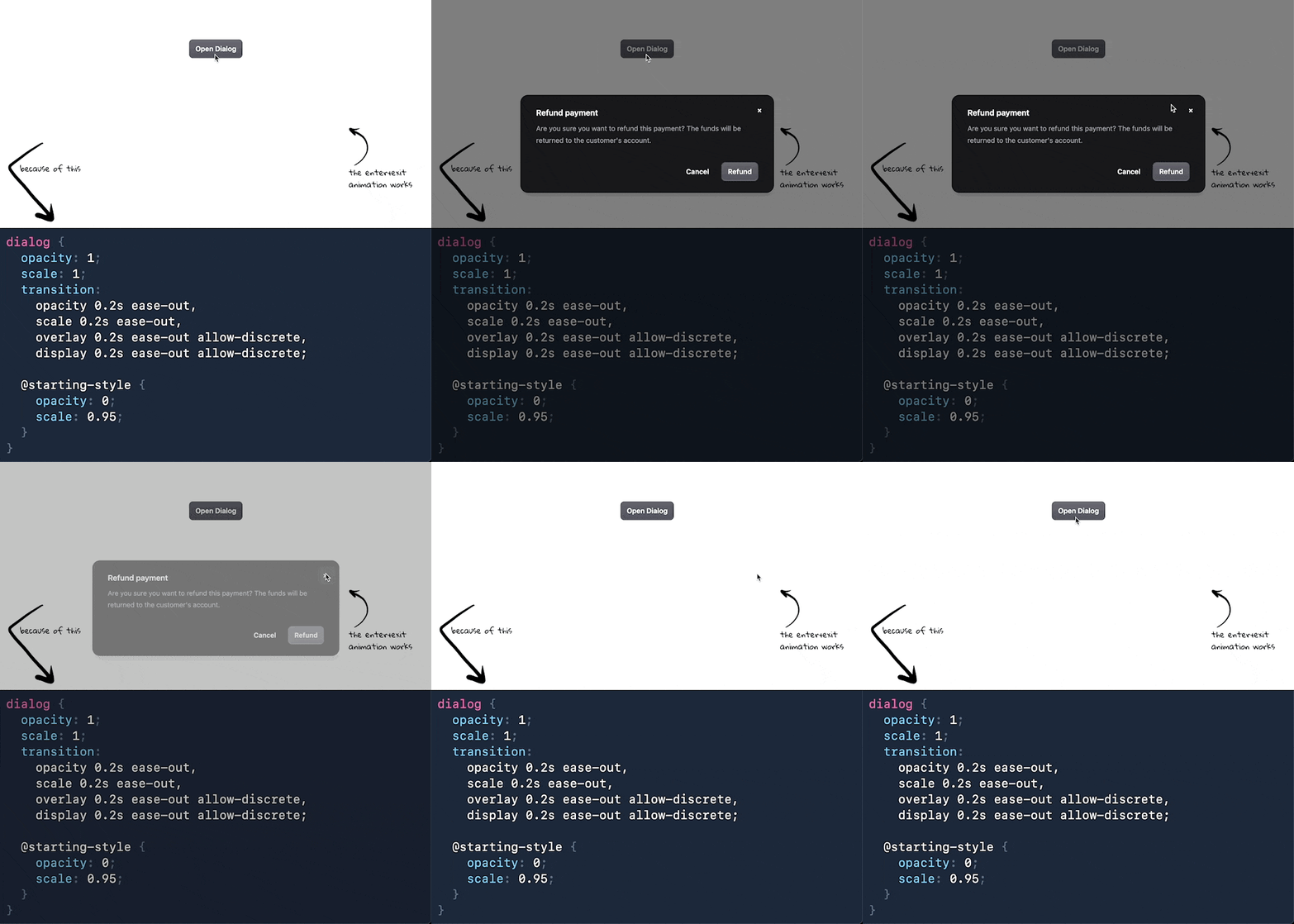
Enter animations are easy with @starting-style, but exit animations need transition-behavior: allow-discrete to work. Most CSS properties are continuous—opacity can be 0.5, colors can blend. But display is discrete: it’s either none or block, with no intermediate values.
The allow-discrete keyword tells the browser to apply transition timing even for discrete properties. For closing animations, the browser keeps the element visible, runs the exit transition, then flips to display: none only after the transition completes.
dialog { opacity: 1; scale: 1; transition: opacity 0.2s ease-out, scale 0.2s ease-out, overlay 0.2s ease-out allow-discrete, display 0.2s ease-out allow-discrete; @starting-style { opacity: 0; scale: 0.95; }} dialog:not([open]) { opacity: 0; scale: 0.95;}The overlay property controls whether the dialog stays in the top layer during the transition—without it, the dialog would immediately drop behind other content.
Don’t forget the backdrop:
dialog::backdrop { background-color: rgb(0 0 0 / 0.5); transition: background-color 0.2s ease-out, overlay 0.2s ease-out allow-discrete, display 0.2s ease-out allow-discrete; @starting-style { background-color: rgb(0 0 0 / 0); }} dialog:not([open])::backdrop { background-color: rgb(0 0 0 / 0);}Demo: